
Artificial Intelligence (AI) is transforming the way we live, work, and interact every day. From simple smartphone assistants to complex business operations, AI technology helps simulate human intelligence, enabling machines to perform decision-making processes and analyze large data sets efficiently. The benefits of artificial intelligence are visible in almost every sector, including healthcare, education, and business.
AI applications like AI-powered solutions, virtual assistants, and AI-driven automation streamline tasks, reduce human error, and improve overall productivity. By integrating AI into daily life, individuals and organizations can enjoy enhanced business efficiency, smarter workflows, and a significant competitive advantage in an increasingly digital world.
What Is Artificial Intelligence? (Beginner Overview)
Artificial Intelligence is a branch of computer science that allows machines to simulate human intelligence, perform human learning and comprehension, and make decision-making processes similar to humans. AI systems use Machine Learning and Deep Learning algorithms to analyze data, recognize patterns, and improve over time. These intelligent systems can work continuously without fatigue, making them highly efficient for both personal and professional use.
In our daily lives, AI-powered solutions are everywhere. From chatbots assisting in customer service to virtual assistants managing schedules, AI makes everyday tasks easier. Businesses also use AI in business to improve productivity and enhance business efficiency. Even small AI applications, like recommendation engines on streaming platforms, use predictive analytics to suggest content tailored to your preferences.
Key Benefits of Artificial Intelligence
AI brings numerous advantages that improve lives and businesses. One of the main benefits is the ability to analyze large data sets and make data-driven decisions in real-time. AI helps organizations gain a competitive advantage by offering insights that humans might miss. For individuals, AI simplifies daily routines, assists in planning, and makes tasks faster and smarter.
AI-powered robots and Robotic Process Automation (RPA) streamline operations across industries. They automate repetitive tasks, reduce human error, and increase operational efficiency. Furthermore, AI enhances innovation and development by helping researchers and professionals tackle complex problems using AI in research and development. These benefits collectively improve quality of life and business outcomes.
Automation and Increased Efficiency

Automation is one of the most visible impacts of AI in daily life. AI-driven automation allows companies to streamline production, reduce delays, and manage resources efficiently. Intelligent systems such as AI-powered robots can perform tedious tasks without breaks, ensuring 24/7 service availability and minimizing mistakes.
AI improves operational efficiency by managing routine activities like payroll, inventory tracking, or scheduling. Businesses gain a competitive advantage through intelligent automation, while individuals enjoy smarter tools that save time. By adopting AI, both companies and consumers benefit from enhanced workflow optimization and better overall productivity.
Improved Customer Experience and Personalization
AI in customer service is revolutionizing the way businesses interact with clients. Chatbots and virtual assistants provide quick, personalized support, creating a personalized customer experience. By analyzing user behavior, AI systems can recommend products, answer queries, and anticipate customer needs.
Natural Language Processing (NLP) allows AI to understand human language, making interactions seamless and natural. This capability enables real-time data analysis for customer preferences, helping companies deliver tailored solutions and support. In turn, businesses improve customer loyalty while users enjoy smoother and more intuitive services.
AI in Healthcare, Research, and Innovation
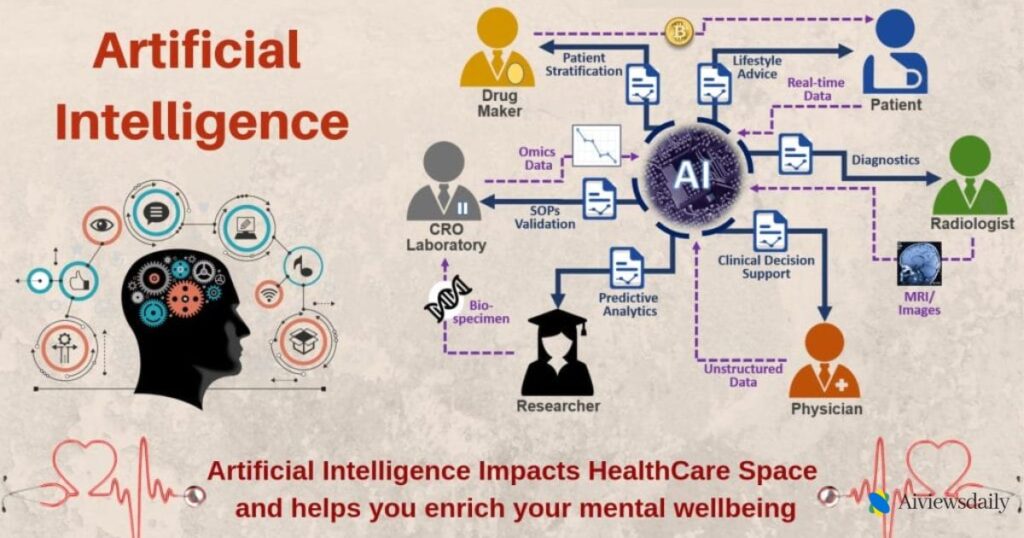
AI in healthcare is transforming diagnostics, treatment, and patient care. AI tools support disease detection and diagnosis, remote patient monitoring, and predictive health analytics. For example, AI algorithms can detect early signs of illnesses from scans, while virtual assistants remind patients of medication schedules.
In research and innovation, AI accelerates progress by analyzing large data sets and identifying patterns and trends that humans might miss. Generative AI contributes to simulations and predictive modeling, enhancing innovation and development in pharmaceuticals, climate science, and technology. These advancements demonstrate AI’s transformative power in daily life and professional work.
Continuous Learning and Adaptability of AI Systems
AI systems continuously improve through Machine Learning and Deep Learning, enabling intelligent automation and smarter solutions. These systems learn from data, adapt to new scenarios, and provide better insights over time. This capability allows AI to predict trends, optimize processes, and assist in complex problem-solving.
Businesses leverage this adaptability for supply chain optimization, risk management strategies, and business continuity planning. Even everyday tools like smart assistants or AI recommendation engines become more accurate as they adapt to user behavior. Continuous learning ensures AI remains valuable and responsive to evolving needs.
The Future of Work and Education with AI

AI is shaping how we work and learn. AI-powered solutions automate repetitive tasks, allowing employees to focus on creative problem-solving. Virtual assistants and AI applications help students with learning, research, and personalized education plans, improving workforce optimization.
In the professional world, AI tools assist in predictive forecasting, decision-making, and digital transformation. Companies use AI for strategic planning and operational improvement, while schools and universities integrate intelligent systems to enhance learning outcomes. The future workforce will rely heavily on AI to boost innovation and development.
Limitations, Disadvantages, and Ethical Concerns of AI
Despite its benefits, AI has limitations. AI systems can inherit biases from training data, which affects decision-making processes. Automation may lead to job displacement, and ethical concerns arise in privacy, surveillance, and accountability. AI adoption must be monitored carefully to prevent misuse.
Moreover, AI is not perfect in understanding context or emotional intelligence. While AI-powered solutions excel at analyzing large data sets, they may struggle with creativity or nuanced judgment. Businesses and users must balance AI efficiency with human oversight to ensure ethical and fair outcomes.
How to Choose the Right AI Tools or Assistants
Choosing the right AI tool requires understanding your needs, budget, and technical capabilities. Evaluate AI tools based on accuracy, adaptability, ease of integration, and support. Consider whether the tool offers predictive analytics, Robotic Process Automation (RPA), or Natural Language Processing (NLP) capabilities.
For businesses, selecting AI solutions that enhance business continuity planning, operational efficiency, and competitive advantage is essential. Individuals should prioritize tools that provide personalized customer experience or improve productivity. Testing multiple solutions and analyzing performance can help ensure the best AI adoption.
Conclusion
AI is no longer a futuristic concept; it is embedded in our daily lives. From AI-powered robots to virtual assistants, AI helps us automate repetitive tasks, reduce human error, and achieve enhanced business efficiency. By understanding and leveraging AI applications responsibly, we can improve productivity, customer experiences, healthcare outcomes, and educational growth. With careful adoption, AI can truly transform both work and daily life.
FAQs
What are the benefits of artificial intelligence?
AI improves productivity, automates repetitive tasks, enhances decision-making, and provides personalized customer experiences.
What are the 5 advantages and 5 disadvantages of artificial intelligence?
Advantages: Automation, predictive analytics, enhanced efficiency, data-driven decisions, continuous learning.
Disadvantages: Job displacement, biases in AI, high costs, privacy concerns, limited emotional understanding.
What are the pros and cons of AI?
Pros: AI-driven automation, faster problem-solving, real-time data analysis.
Cons: Ethical concerns, dependency on machines, potential errors, privacy risks.
What are 20 benefits of AI?
Automation, enhanced business efficiency, predictive forecasting, fraud detection systems, intelligent systems, remote patient monitoring, disease detection and diagnosis, innovation and development, workforce optimization, digital transformation, risk management strategies, supply chain optimization, business continuity planning, AI-powered robots, AI tools, Robotic Process Automation (RPA), virtual assistants, chatbots, personalized customer experience, operational efficiency.
What are 5 uses of AI in daily life?
Smart assistants, AI-powered solutions for customer service, predictive analytics in shopping, AI in healthcare for diagnosis, and intelligent automation for home or office tasks.
Meta description
Discover the top benefits of artificial intelligence, from automation and efficiency to smarter decision-making and innovation.